
For years, the aesthetic conversation centered on adding volume back to the face. Sculptra represents a different question entirely: what if, instead of filling space, treatment could prompt the skin to rebuild its own structural foundation? That shift, from replacing volume to regenerating it, is why Sculptra has become one of the most discussed biostimulators in aesthetic medicine, and why the research behind it keeps expanding.
What Sculptra Actually Does
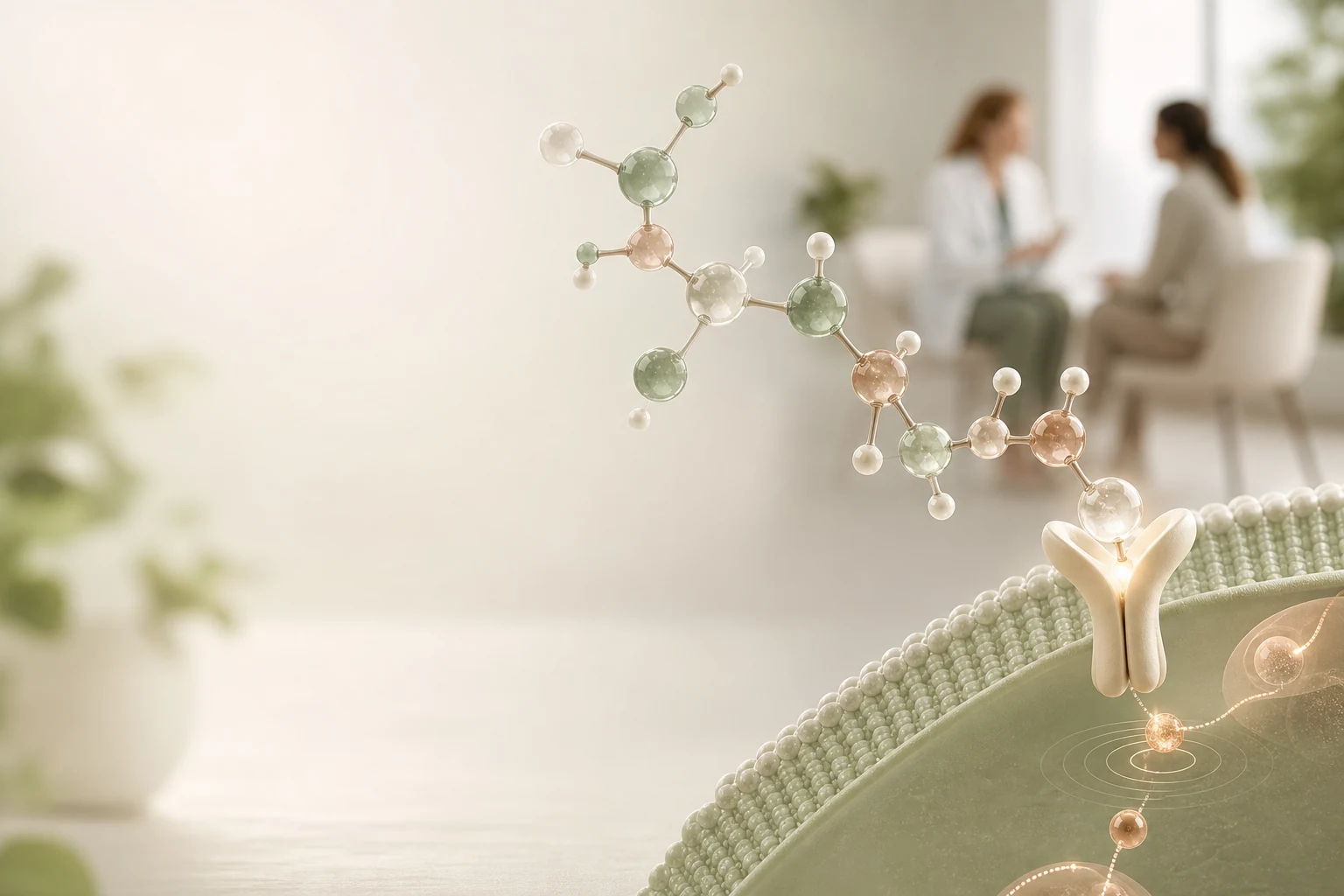
Sculptra is a poly-L-lactic acid (PLLA) biostimulator, not a traditional dermal filler. Rather than adding immediate volume the way hyaluronic acid fillers like Juvéderm and Restylane do, Sculptra works by activating fibroblasts, the cells responsible for collagen production, prompting the body to gradually rebuild its own extracellular matrix. The visible result is not the product itself. It is new collagen and elastin the body has generated in response to it.
This is why Sculptra results appear over months rather than weeks. There is no moment of instant transformation because none is intended. Improvement builds in layers as collagen accumulates, which is also why the final result tends to look less like an add-on and more like the patient’s own structure, simply restored.
The Loading Dose: How Treatment Is Planned
Sculptra dosing follows a loading dose approach, one vial per decade of life, as a starting framework. A patient in their 40s will start with four vials total, spread across a series of sessions rather than delivered at once. No more than 2 vials are used per appointment, with sessions spaced 6 to 8 weeks apart, allowing each round of collagen stimulation to develop before the next treatment. After the loading dose, no further treatments are needed until the year mark, with an annual vial recommended as continued maintenance.
What the Research Is Finding Now
Sculptra has been studied for over two decades, but recent data is expanding what it is understood to do. Expert reviews presented at industry meetings in early 2026 describe fibroblast activation that reaches beyond collagen alone, prompting the production of elastin and other extracellular matrix proteins tied to adipogenesis, the process by which healthy fat cells form, with long-term improvements observed in volume, elasticity, and skin thickness.
A head-to-head study presented at the American Society for Dermatologic Surgery’s 2024 meeting compared Sculptra to another biostimulator and found it activated a broader range of tissue-remodeling and collagen-formation pathways, while producing less inflammation in the process. That same body of research pointed to what is now being described as a fat pad effect: evidence that Sculptra may positively influence how fat cells themselves function, which researchers believe could help explain the skin glow, improved facial fat structure, and reduction in visible aging signs many providers report seeing clinically.
This fat pad research has practical relevance beyond typical age-related volume loss. Newer interim studies are examining how fat tissue composition changes in patients who experience facial and body volume loss following rapid, medication-driven weight loss, offering a biological explanation for the hollowing some patients notice after significant weight change. For patients navigating facial changes tied to weight loss, this positions Sculptra as a regenerative option worth discussing, not just a wrinkle treatment.
Skin Quality, Not Just Volume
One of the more significant shifts in how Sculptra is talked about clinically is a move away from treating it purely as a volumizer. Recent clinical discussion increasingly frames facial aging as a structural process involving fat, collagen, skin support, and tissue quality together, rather than the appearance of individual wrinkles in isolation, which is steering treatment planning toward longer-term skin support instead of one-off correction.
That reframing shows up in outcomes data too. Research pairing Sculptra with hyaluronic acid skin boosters has found the two work on different timelines that complement each other: the HA component improves hydration and smoothness quickly, while Sculptra continues driving gradual collagen and elastin remodeling underneath, with patient satisfaction in these studies climbing steadily over the following months rather than peaking immediately and fading.
Why Timing Matters
Because collagen production naturally declines with age, Sculptra is recommended for patients starting in their 30s rather than waiting until volume loss is already visible. The idea is not to correct damage that has already occurred, but to support the collagen the body is still producing before that decline compounds. This fits the same principle Arvé Aesthetics applies across every treatment: working with the body’s own processes, gradually and with intention, rather than waiting for a more dramatic correction to become necessary.
What This Means for a Consultation
Sculptra is not a faster path to volume, and it is not meant to be. It is a longer, more deliberate process that asks the body to do the rebuilding, which is exactly why the results hold up for two years. A consultation at Arvé Aesthetics will walk through how many vials make sense as a starting point, how sessions will be spaced, and what to expect at each stage as the collagen response builds, so the pacing of treatment is understood from the very first appointment.